
Asset criticality analysis – A technical guide for maintenance managers
Just a 22-minute read
Understanding which assets are most critical is essential to optimizing maintenance resources and preventing costly failures.
Asset criticality analysis allows maintenance managers to focus efforts where they have the highest impact on reliability, safety, and production continuity.
This technical guide provides actionable methods, risk-based strategies, and best practices for maintenance managers using a CMMS.

Introduction
Not all assets are equal. Some failures have minimal impact on production, while others can halt operations, endanger personnel, or incur significant costs. Identifying and ranking assets by criticality is the foundation of a risk-based maintenance strategy and ensures that maintenance efforts are applied efficiently.
A structured asset criticality analysis integrates quantitative and qualitative data, including historical failure rates, repair costs, safety implications, and operational impact. By systematically assessing each asset, maintenance managers can make data-driven decisions, allocate resources effectively, and demonstrate measurable improvements in uptime and reliability.
1. Understanding asset criticality
Asset criticality is a systematic approach to determining the relative importance of each asset within an organization. Not all equipment contributes equally to production, safety, or operational continuity. Some assets, if they fail, can halt an entire production line, jeopardize personnel safety, or incur substantial financial loss, while others have a limited impact. Understanding these differences is essential for allocating maintenance resources efficiently and maximizing the return on maintenance investments.
The assessment of asset criticality combines both quantitative and qualitative data. Key factors include:
- Failure frequency: Historical data on how often the asset fails, including minor and major breakdowns.
- Downtime impact: The operational and financial consequences of asset unavailability, measured in lost production hours or revenue.
- Safety implications: The potential of asset failure to cause injury or endanger personnel.
- Environmental risk: Potential harm to the environment, such as chemical leaks or emissions.
- Repair and replacement cost: Direct cost to fix or replace the asset, including labor and parts.
By analyzing these factors, assets can be classified into critical, important, and non-critical categories. Critical assets demand the highest level of monitoring, preventive actions, and investment, while non-critical assets may require only basic preventive checks. This classification provides maintenance managers with a clear framework for prioritization, ensuring that time, workforce, and materials are applied where they generate the greatest impact.
A well-structured criticality assessment also enables data-driven decision-making. Instead of relying on intuition or historical practices, maintenance managers can justify maintenance strategies with measurable metrics, demonstrating to management the reasoning behind resource allocation and maintenance investments. This approach not only improves reliability but also enhances safety compliance, reduces downtime, and optimizes operational costs.
Asset criticality is the foundation of a structured maintenance strategy. Understanding the relative importance of assets allows maintenance teams to prioritize effectively, prevent critical failures, and support operational continuity in a measurable, systematic way.
ManWinWin Software is the result of 40+ years of experience and know-how

With thousands of users in 120+ countries in the World. Created by Portuguese Engineers has been improved with implementations, and listening to thousands of clients worldwide using the system.
Get a personalized demo of ManWinWin CMMS
Please fill out the form and wait for one of our specialists to contact you to schedule a date at your convenience.
- Discover how ManWinWin solves your specific challenges.
- See ManWinWin’s core features, tailored to your needs.
- Gain best practices from the world’s most experienced CMMS company, specific for your success.
- Discover your ideal ManWinWin license, investment, and timing of implementation.
You can opt to watch a recorded demo of ManWinWin at your own pace (watch a recorded demo here)
2. Methods to assess asset criticality
Assessing asset criticality is essential to determine which assets require the most attention and resources. A structured approach ensures that maintenance strategies are data-driven, measurable, and aligned with operational priorities. There are several widely used methods, each suitable for different types of operations and data availability.
Failure Mode and Effects Analysis (FMEA)
FMEA is a systematic method for identifying potential failure modes of an asset, evaluating their consequences, and prioritizing actions. Each failure mode is assessed using three key factors:
- Severity (S): Impact of failure on operations, safety, or environment.
- Occurrence (O): Probability that the failure will occur.
- Detection (D): Likelihood that the failure will be detected before causing harm.
These factors are combined into a Risk Priority Number (RPN = S × O × D), allowing maintenance managers to rank assets based on risk. FMEA is particularly useful for complex machinery or critical systems where failures can have high operational or safety consequences.
Criticality Scoring Matrix
A scoring matrix is a simpler, yet effective, method for smaller operations or when historical data is limited. Assets are scored against several criteria, such as:
- Production impact
- Safety hazards
- Environmental risk
- Repair/replacement cost
- Frequency of failures
Scores are summed or weighted to classify assets into categories such as critical, important, or non-critical. The matrix provides a visual, easy-to-understand prioritization tool that facilitates team discussions and management reporting.
Risk-Based Maintenance (RbM) Approach
The Risk-Based Maintenance approach integrates criticality assessment with maintenance planning. In RbM, maintenance resources are allocated according to the potential risk posed by asset failure, rather than simply following a time-based schedule.
- High-risk assets receive preventive or predictive attention.
- Medium-risk assets may follow routine inspections and condition monitoring.
- Low-risk assets receive minimal intervention unless new data indicates increased risk.
RbM ensures that maintenance budgets and personnel are applied where they have the highest operational impact.
Data-Driven Asset Risk Assessment
Modern maintenance management relies on quantitative data collected from CMMS, IoT sensors, and historical records. By analyzing failure trends, downtime patterns, and operational impact, maintenance managers can refine criticality rankings and continuously improve prioritization strategies.
- Incorporate metrics such as MTBF (Mean Time Between Failures), MTTR (Mean Time to Repair), and asset utilization rates.
- Combine data with expert judgment to address qualitative factors like safety and environmental impact.
- Update criticality scores regularly to reflect changing operational conditions.
Using structured methods like FMEA, scoring matrices, risk-based maintenance, and data-driven analysis allows maintenance managers to evaluate asset criticality objectively, prioritize effectively, and make informed decisions that reduce risk, downtime, and costs.
3. Prioritizing maintenance actions
Once asset criticality has been assessed, the next step is to translate the results into actionable maintenance strategies. Criticality scores allow maintenance managers to focus on assets that have the highest impact on operations, safety, and costs, forming the basis of a risk-based maintenance strategy.
Preventive maintenance should be scheduled according to asset criticality. High-criticality assets, such as main pumps or production-critical machinery, require shorter maintenance intervals, detailed inspections, and proactive component replacements, while lower-criticality assets, like secondary conveyors, can follow standard schedules. Effective preventive maintenance includes:
- Developing a PM calendar based on criticality scores and aligned with production schedules.
- Adjusting intervals according to operational load, environmental conditions, and historical failure patterns.
- Documenting and tracking all PM tasks in a CMMS to monitor compliance and effectiveness.
Predictive maintenance complements preventive work by focusing on high-risk assets through real-time monitoring and data analysis. Key actions include:
- Installing sensors to monitor vibration, temperature, pressure, or other relevant parameters.
- Analyzing trends to detect early signs of wear, misalignment, or abnormal operation.
- Integrating predictive alerts into maintenance planning to trigger timely interventions.
Prioritization also extends to spare parts and inventory management. High-criticality assets should have essential components readily available, while lower-criticality assets can rely on just-in-time inventory principles. Effective inventory practices involve:
- Maintaining a criticality-based spare parts list.
- Monitoring inventory levels within a CMMS to ensure component availability.
- Evaluating lead times and supplier reliability for critical equipment.
Finally, criticality-driven prioritization must be embedded in daily maintenance decision-making. Using a CMMS, managers can:
- Automatically rank work orders by risk level.
- Allocate technicians and schedule tasks according to priority.
- Generate reports showing the impact of maintenance actions on uptime and safety.
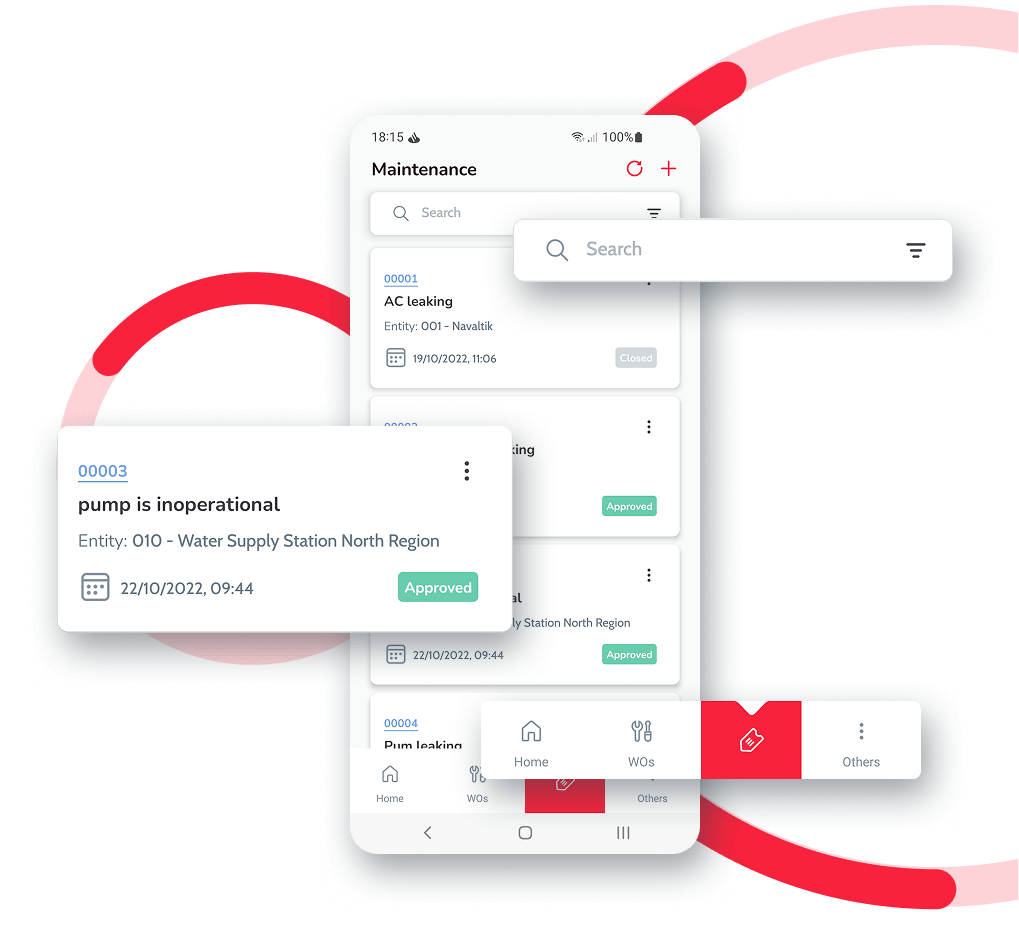
Translating asset criticality into preventive schedules, predictive monitoring, inventory management, and decision-making creates a robust maintenance prioritization method that optimizes resources, maximizes uptime, and supports a fully risk-based maintenance strategy.
Join ManWinWin Software, the world’s most experienced company in CMMS!
Choose a better way to manage your Maintenance
Watch or book a Demo
Watch a recorded demo or get to know ManWinWin guided by one of our experts.
Use ManWinWin free version
Free forever industrial maintenance management software up to 100 Assets. Start today!
4. Implementing asset criticality in a CMMS
Assessing asset criticality and prioritizing maintenance are only effective if the process is integrated into daily operations. A CMMS (Computerized Maintenance Management System) enables maintenance teams to operationalize criticality analysis, ensuring that preventive, predictive, and reactive actions are systematically guided by risk and impact.
- By recording all assets, their criticality scores, and historical maintenance data in a CMMS, managers can automatically generate risk-ranked work orders, ensuring that high-criticality equipment receives attention first. Preventive maintenance schedules can be dynamically adjusted based on asset priority, operational conditions, and real-time performance metrics. Predictive maintenance alerts can be linked to high-risk assets, enabling early interventions before failures occur, while condition monitoring data is centralized for continuous analysis.
- Inventory and spare parts management also benefit from CMMS integration. Criticality-based spare parts lists ensure that essential components for high-priority assets are available immediately, reducing repair times and avoiding production losses. Low-criticality assets can follow just-in-time inventory principles, optimizing stock levels and reducing unnecessary costs.
- A CMMS further supports data-driven decision-making by providing detailed reports and dashboards that show the impact of maintenance actions on uptime, reliability, and safety. Managers can measure compliance with criticality-based schedules, track resource allocation, and continuously refine maintenance strategies based on real-time data.
- ManWinWin offers a comprehensive solution for implementing asset criticality across all maintenance processes. Its CMMS allows for structured asset hierarchies, real-time monitoring, automated preventive and predictive scheduling, and integrated inventory management. By embedding criticality-driven strategies in a user-friendly platform, ManWinWin helps maintenance managers maximize uptime, optimize resources, and implement a robust risk-based maintenance strategy.
Integrating asset criticality into a CMMS ensures that maintenance decisions are systematic, data-driven, and focused on high-impact assets. Using a platform like ManWinWin, organizations can operationalize criticality analysis, enhance reliability, improve safety, and optimize maintenance resources efficiently.
Discover ManWinWin services in maintenance management consulting

Implementation
The implementation consultancy is the component that turns a good software into a good solution.
Training
Training is the component that consolidates and sustains the solution on the client.
Ready to take your maintenance to the next level?
Trusted in over 120 countries – join the global maintenance movement with ManWinWin Software

Conclusion: Turning asset criticality into actionable maintenance results
Asset criticality analysis is the foundation for a structured and effective maintenance strategy. By identifying which assets have the highest operational, safety, or financial impact, maintenance managers can prioritize preventive and predictive actions, allocate spare parts efficiently, and optimize workforce deployment.
Integrating criticality into a CMMS transforms this knowledge into actionable results. Platforms like ManWinWin centralize asset data, automate risk-based prioritization, and provide real-time monitoring and reporting, allowing teams to track the impact of maintenance on uptime, reliability, and safety.
A well-implemented risk-based maintenance strategy ensures that maintenance efforts are focused on the assets that matter most, reducing unplanned downtime, extending asset lifespan, and improving operational performance. By turning criticality insights into systematic actions, organizations shift from reactive to proactive maintenance, generating measurable benefits across the entire operation.
Implementing criticality-driven maintenance through a CMMS like ManWinWin empowers organizations to make data-driven decisions, optimize resources, and achieve reliable, safe, and cost-effective maintenance outcomes.
Join ManWinWin Software, the world’s most experienced company in CMMS!
Choose a better way to manage your Maintenance














About the Author
José Fernandes is the Managing Partner at ManWinWin Software (Navaltik Management), leading company in maintenance management consultancy and CMMS (Computerized Maintenance Management System) solutions.
With a technical background in industrial organization, José Fernandes has been with Navaltik since the 1990s, progressing from consultant to strategic leader and a key figure in the development of the ManWinWin software.
Throughout his career, he has overseen hundreds of maintenance system implementations across more than 30 countries, including regions in Africa, Australia, the Middle East, and East Asia.