
Asset management software solutions for improved maintenance and performance
Just a 23-minute read
Maintenance teams manage complex equipment portfolios daily. Asset management software solutions centralize data, streamline planning, and deliver predictive insights, helping teams prevent failures and optimize performance.
Explore how asset management software solutions enhance maintenance efficiency, extend asset lifespan, and provide actionable insights for smarter, data-driven decisions.
Introduction
Managing industrial assets without structured software is like navigating a city without a map. Unplanned downtime, unexpected failures, and fragmented data make decision-making inefficient. Asset management software solutions provide a centralized system to track equipment, monitor performance, schedule maintenance, and maintain complete audit trails.
Modern platforms integrate predictive analytics, IoT data, and reporting dashboards, enabling maintenance teams to move from reactive repair cycles to proactive asset stewardship. This improves uptime, extends asset lifecycles, and helps control maintenance costs across sites.
1. Asset tracking and maintenance history
Accurate asset tracking is the foundation of effective maintenance management. Without detailed records, maintenance decisions are based on guesswork, increasing the risk of failures and unplanned downtime. Asset management software solutions provide a centralized database of all equipment, components, and locations, allowing maintenance teams to see the full picture at any moment.
Key benefits of asset tracking include:
- Complete equipment records – Each asset is logged with technical specifications, serial numbers, installation dates, and operational parameters. This ensures that maintenance teams know exactly what they are dealing with, reducing mistakes and improving repair accuracy.
- Maintenance history and lifecycle insight – Every intervention, whether preventive, corrective, or predictive, is documented. Historical data helps identify recurring issues, calculate total cost of ownership (TCO), and anticipate future maintenance needs. For example, tracking a pump’s past failures can highlight a design flaw or recurring operational stress before it leads to catastrophic downtime.
- Compliance and audit readiness – Regulatory standards like ISO 55000 or ISO 9001 require proof of maintenance and asset integrity. A structured asset tracking system provides a clear audit trail, ensuring internal and external audits are straightforward and verifiable.
- Real-time accuracy and data integrity – Mobile-enabled CMMS platforms allow technicians to log work immediately, eliminating the delays and errors associated with paper records. This real-time data improves decision-making, from scheduling maintenance to reallocating resources efficiently.
In practice, organizations that implement structured asset tracking report measurable improvements. For instance, facilities using a CMMS like ManWinWin have reduced unnecessary repairs by up to 15% and improved equipment uptime by 10–12% within the first year.
Centralized maintenance history also supports predictive analytics. By analyzing failure trends across multiple sites, managers can prioritize high-risk equipment, schedule proactive maintenance, and optimize spare parts inventory, ultimately extending asset lifecycles and controlling operational costs.
ManWinWin Software is the result of 40+ years of experience and know-how

With thousands of users in 120+ countries in the World. Created by Portuguese Engineers has been improved with implementations, and listening to thousands of clients worldwide using the system.
Get a personalized demo of ManWinWin CMMS
Please fill out the form and wait for one of our specialists to contact you to schedule a date at your convenience.
- Discover how ManWinWin solves your specific challenges.
- See ManWinWin’s core features, tailored to your needs.
- Gain best practices from the world’s most experienced CMMS company, specific for your success.
- Discover your ideal ManWinWin license, investment, and timing of implementation.
2. Maintenance planning and optimization
Effective maintenance planning transforms reactive operations into proactive, cost-controlled workflows. Proper scheduling, predictive insights, and resource management reduce downtime, extend asset life, and improve overall operational efficiency.
1. Preventive maintenance schedules
Preventive maintenance (PM) involves performing regular, planned interventions based on equipment manuals, operating hours, or condition thresholds. Scheduling these tasks ensures that machines receive timely lubrication, calibration, and inspections, reducing unexpected breakdowns.
For example, a production line motor might be scheduled for monthly inspection and quarterly bearing replacement. CMMS solutions like ManWinWin automate reminders and track completion rates, helping managers maintain compliance with manufacturer recommendations and internal maintenance standards.
2. Predictive maintenance insights
Predictive maintenance (PdM) uses historical data, sensor readings, and trend analysis to anticipate failures before they occur. By leveraging vibration analysis, thermal imaging, or IoT sensor data, maintenance teams can intervene only when necessary, avoiding unnecessary part replacements or service.
Studies show predictive strategies can reduce maintenance costs by 10–30% while improving uptime by up to 20%. This approach also enables better allocation of labor and materials, ensuring resources are used efficiently and failures are prevented proactively.
3. Resource allocation and spare parts management
Optimal maintenance planning requires aligning labor, tools, and spare parts with scheduled tasks. Overstaffing increases costs, while insufficient resources create bottlenecks and delayed repairs.
A CMMS tracks resource usage and inventory levels, automatically flagging low-stock items and scheduling technicians according to skillsets and availability. For instance, spare part lead times can be integrated with PM schedules, preventing production interruptions due to missing components.
4. KPIs and performance dashboards
Key performance indicators (KPIs) are essential to monitor and improve maintenance effectiveness. Common metrics include:
- MTBF (Mean Time Between Failures) – Measures equipment reliability over time.
- MTTR (Mean Time To Repair) – Tracks repair efficiency and identifies bottlenecks.
- OEE (Overall Equipment Effectiveness) – Combines availability, performance, and quality to quantify asset productivity.
This structured approach allows maintenance teams to move from reactive problem-solving to strategic asset stewardship. By integrating scheduling, predictive analysis, resource management, and KPI tracking, organizations achieve measurable improvements in uptime, cost control, and operational efficiency.

3. Integration with enterprise systems
Asset management software solutions reach their full potential when integrated with other enterprise platforms. Standalone systems can track assets and schedule maintenance, but connecting them with ERP, IoT networks, and SCADA/PLC systems creates a holistic view of operations, enabling smarter decision-making and better alignment with business objectives.
- ERP integration ensures that maintenance activities align with production schedules and financial planning. For example, linking work orders to ERP allows managers to verify material availability, budget impact, and labor costs before executing maintenance tasks. This reduces the risk of resource conflicts and unplanned downtime.
- IoT and sensor integration provide real-time monitoring of equipment conditions. Sensors can track vibration, temperature, pressure, or energy consumption, feeding data directly into the CMMS. Automated alerts for deviations from normal parameters allow predictive maintenance interventions, minimizing failures and extending asset life.
- SCADA and PLC connectivity enables direct access to operational data from production equipment. Integration with the CMMS allows maintenance teams to correlate machine performance with historical maintenance records, helping to pinpoint root causes of recurring failures and optimize preventive strategies.
- Cross-department coordination improves when systems communicate seamlessly. Maintenance teams can collaborate with production, procurement, and quality departments to schedule interventions with minimal disruption, ensure parts availability, and maintain compliance with operational standards.
- Strategic planning and forecasting benefit from integrated systems as well. Consolidated data allows managers to analyze performance trends across multiple sites, prioritize high-risk assets, and make informed decisions on CAPEX investments, maintenance budgets, and resource allocation.
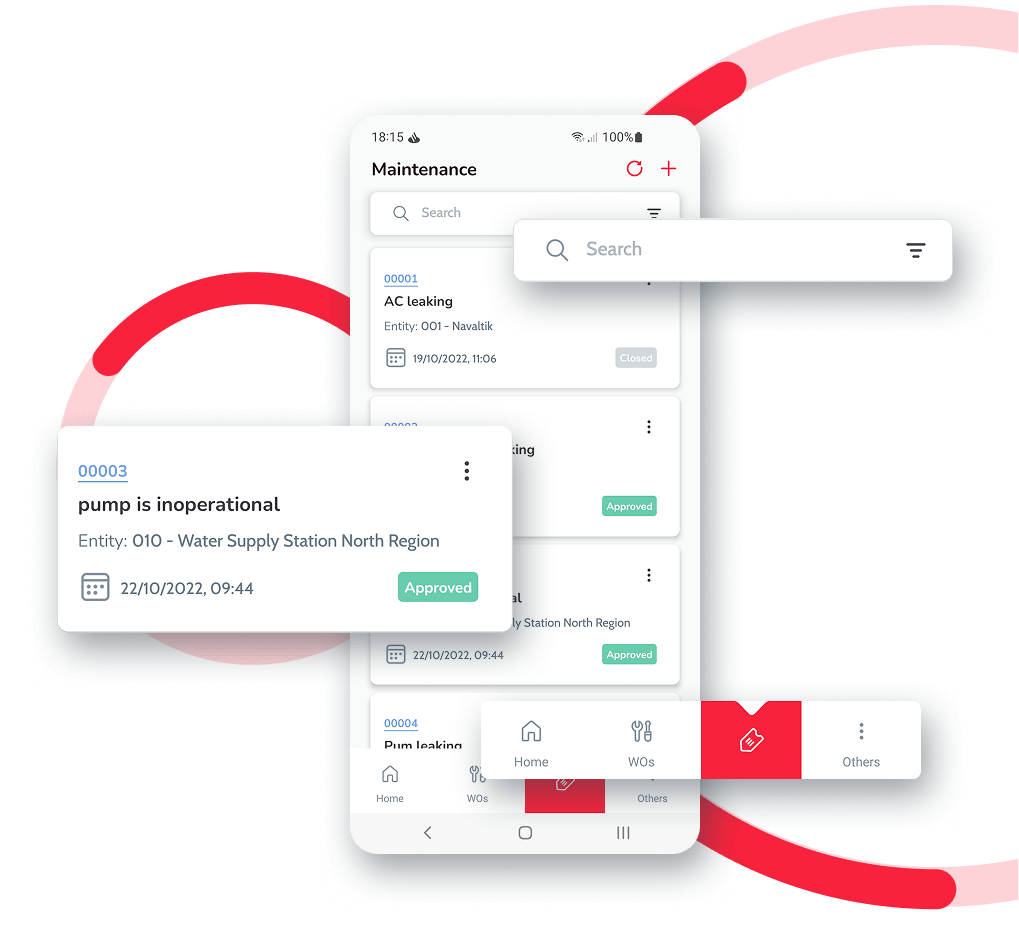
Join ManWinWin Software, the world’s most experienced company in CMMS!
Choose a better way to manage your Maintenance
Watch or book a Demo
Watch a recorded demo or get to know ManWinWin guided by one of our experts.
Use ManWinWin free version
Free forever industrial maintenance management software up to 100 Assets. Start today!
4. FAQs about asset management software
Common questions from maintenance managers
dummy
1. How does a CMMS differ from traditional spreadsheets?
A CMMS centralizes all asset and maintenance data, automates alerts, and provides actionable analytics. Unlike spreadsheets, it scales across multiple sites, prevents human errors, and ensures real-time visibility of maintenance activities.
2. Can asset management software handle predictive maintenance?
Yes. Modern platforms analyze historical data, sensor inputs, and performance trends to forecast potential failures. This allows interventions only when needed, reducing unnecessary downtime and extending asset lifecycles.
3. Is asset management software suitable for small and large operations?
Absolutely. Solutions like ManWinWin scale from SMEs to multi-site industrial organizations, balancing user-friendliness with structured, scalable processes. Both small teams and large maintenance departments benefit from centralized data and automated scheduling.
4. How does asset management software support compliance?
It provides a full audit trail of maintenance activities, generates reports ready for ISO 55000 and ISO 9001 audits, and ensures that preventive and corrective tasks are completed according to regulatory or internal standards.
5. What is the typical ROI of implementing an asset management system?
ROI comes from reduced downtime, optimized inventory, and longer asset lifecycles. Real-world implementations often show 10–20% reduction in maintenance costs in the first year, alongside measurable improvements in equipment availability.
6. Can asset management software integrate with other business systems?
Yes. Integration with ERP, IoT, SCADA, and production planning tools ensures maintenance aligns with operational schedules, resource availability, and strategic business objectives, improving coordination and decision-making across departments.
Discover ManWinWin services in maintenance management consulting

Implementation
The implementation consultancy is the component that turns a good software into a good solution.
Training
Training is the component that consolidates and sustains the solution on the client.
Conclusion: maximizing maintenance with asset management
Asset management software solutions are no longer optional—they are central to effective maintenance management. By centralizing asset data, automating workflows, and providing predictive insights, organizations move from reactive repair cycles to structured, strategic maintenance management.
With real-time tracking, preventive and predictive planning, and seamless integration with enterprise systems, maintenance teams can reduce unplanned downtime, optimize spare parts inventory, and extend asset lifecycles. Performance dashboards and KPIs give managers actionable insights to continuously improve maintenance efficiency.
Platforms like ManWinWin offer a globally proven CMMS solution positioned between lightweight SaaS tools and heavy EAM suites.
It provides structured, scalable, and practical maintenance management for industrial and multi-site organizations, making it ideal for managers seeking reliable, data-driven approaches to asset stewardship.
Ready to take your maintenance to the next level?
Trusted in over 120 countries – join the global maintenance movement with ManWinWin Software

Join ManWinWin Software, the world’s most experienced company in CMMS!
Choose a better way to manage your Maintenance








About the Author
José Fernandes is the Managing Partner at ManWinWin Software (Navaltik Management), leading company in maintenance management consultancy and CMMS (Computerized Maintenance Management System) solutions.
With a technical background in industrial organization, José Fernandes has been with Navaltik since the 1990s, progressing from consultant to strategic leader and a key figure in the development of the ManWinWin software.
Throughout his career, he has overseen hundreds of maintenance system implementations across more than 30 countries, including regions in Africa, Australia, the Middle East, and East Asia.

