
How a CMMS reduces parts inventory costs by 30 percent without compromising reliability
Just a 29-minute read
Reducing spare parts inventory without increasing downtime is possible when data replaces guesswork. A well-implemented CMMS provides the control, traceability, and forecasting needed to cut excess stock while maintaining service levels.
Discover five proven CMMS-driven methods to reduce spare parts inventory costs by up to 30% while improving availability, accuracy, and maintenance performance.
Introduction
In most industrial environments, spare parts inventory sits in an uncomfortable position: too much capital tied up, yet frequent stockouts still occur. This contradiction is rarely caused by lack of effort—it is driven by poor visibility, fragmented data, and reactive maintenance behaviors. Inventory decisions are often based on historical habits rather than actual asset criticality or consumption patterns.
A properly configured CMMS changes this dynamic. It connects maintenance execution with inventory control, creating a closed-loop system where every part movement is traceable, forecastable, and justifiable. Across multiple implementations, I’ve consistently observed inventory reductions between 20 and 35 percent within 12–18 months—without increasing operational risk.
1. What drives inventory cost reduction in CMMS environments
A CMMS reduces inventory costs by improving demand visibility, enforcing consumption discipline, optimizing reorder parameters, and eliminating obsolete stock. It transforms inventory from a static warehouse function into a dynamic, data-driven maintenance process.
In practice, inventory cost reduction starts with traceability. Every spare part issued through a CMMS is tied to a work order, asset, and failure context. This linkage is not administrative—it is analytical. It allows maintenance teams to move from assumptions (“we think we use this often”) to evidence (“this bearing is consumed every 47 operating days on asset class A”). This visibility enables three critical control mechanisms:
- Consumption-based planning: Instead of relying on static min/max levels, the CMMS calculates demand using real historical usage. For example, if a pump seal shows a mean consumption of 6 units/year with a lead time of 30 days, safety stock can be mathematically adjusted rather than inflated “just in case.”
- Failure pattern correlation: By linking parts to failure modes, recurring issues become visible. If the same component is repeatedly consumed under corrective maintenance, the problem is not stock—it is reliability. Fixing the root cause reduces both failures and inventory demand.
- Stock accuracy enforcement: Cycle counting integrated with CMMS transactions typically increases inventory accuracy from ~70–80 percent to above 95 percent. This alone eliminates unnecessary reorders caused by “phantom stockouts.”
A less obvious—but high-impact—effect is behavioral. When technicians know that every material withdrawal is recorded against a work order, informal practices disappear. “Unregistered consumption” is one of the main silent drivers of inventory inflation. A CMMS removes that ambiguity. There is also a structural shift in how inventory is perceived. Instead of managing parts as isolated items, the CMMS aligns them with asset criticality:
- Critical assets → defined service levels (e.g., 95–99 percent availability)
- Non-critical assets → reduced or zero stock strategy
This segmentation typically reduces total stock value by 15–25 percent without affecting operational risk.
Field data supports this approach. According to maintenance performance benchmarks (SMRP, Aberdeen), organizations with integrated CMMS and inventory processes achieve:
- 20–30 percent reduction in MRO inventory value
- 10–20 percent improvement in inventory turnover
- Up to 50 percent reduction in emergency purchases
The biggest gains do not come from better purchasing—they come from better maintenance data. Once consumption becomes reliable and visible, excess inventory has nowhere to hide.
ManWinWin Software is the result of 40+ years of experience and know-how

With thousands of users in 120+ countries in the World. Created by Portuguese Engineers has been improved with implementations, and listening to thousands of clients worldwide using the system.
Get a personalized demo of ManWinWin CMMS
Please fill out the form and wait for one of our specialists to contact you to schedule a date at your convenience.
- Discover how ManWinWin solves your specific challenges.
- See ManWinWin’s core features, tailored to your needs.
- Gain best practices from the world’s most experienced CMMS company, specific for your success.
- Discover your ideal ManWinWin license, investment, and timing of implementation.
2. Five ways a cmms reduces parts inventory costs
A CMMS reduces parts inventory costs by making consumption measurable, stock levels defensible, and replenishment rules consistent. The real savings come from removing guesswork, not from cutting stock blindly.
1. Direct linkage between parts and maintenance work
When parts are issued against a work order, you get actual consumption data by asset, failure mode, and intervention type. That lets you separate routine demand from one-off events and stop treating every part like a special case.
2. Dynamic replenishment instead of static stocking
Most excess inventory comes from min/max values that were set years ago and never revisited. A CMMS allows those values to be recalculated using real consumption, lead time, and usage frequency.
3. Duplicate and obsolete stock elimination
Part number duplication is a classic inventory leak. One item can exist under three descriptions, two suppliers, and a slightly different unit of measure, which is a magnificent way to buy the same thing twice.
4. Criticality-based stocking rules
Not every spare part deserves the same availability policy. A critical pump seal on a production bottleneck should not be managed like a filter on a low-risk auxiliary system.
5. Inventory accuracy and stock discipline
A stock room with poor accuracy creates phantom shortages. The system says the part is there, the shelf says otherwise, and the technician ends up ordering it again. Very efficient, in the worst possible way.
Why this creates 30 percent savings: These five mechanisms work together. Parts are consumed more accurately, stock parameters become evidence-based, duplicates disappear, and obsolete items stop inflating the balance sheet.
That is how a CMMS can reduce parts inventory costs by around 30 percent in mature environments: not through a dramatic purge, but through steady removal of waste, error, and defensive stocking.

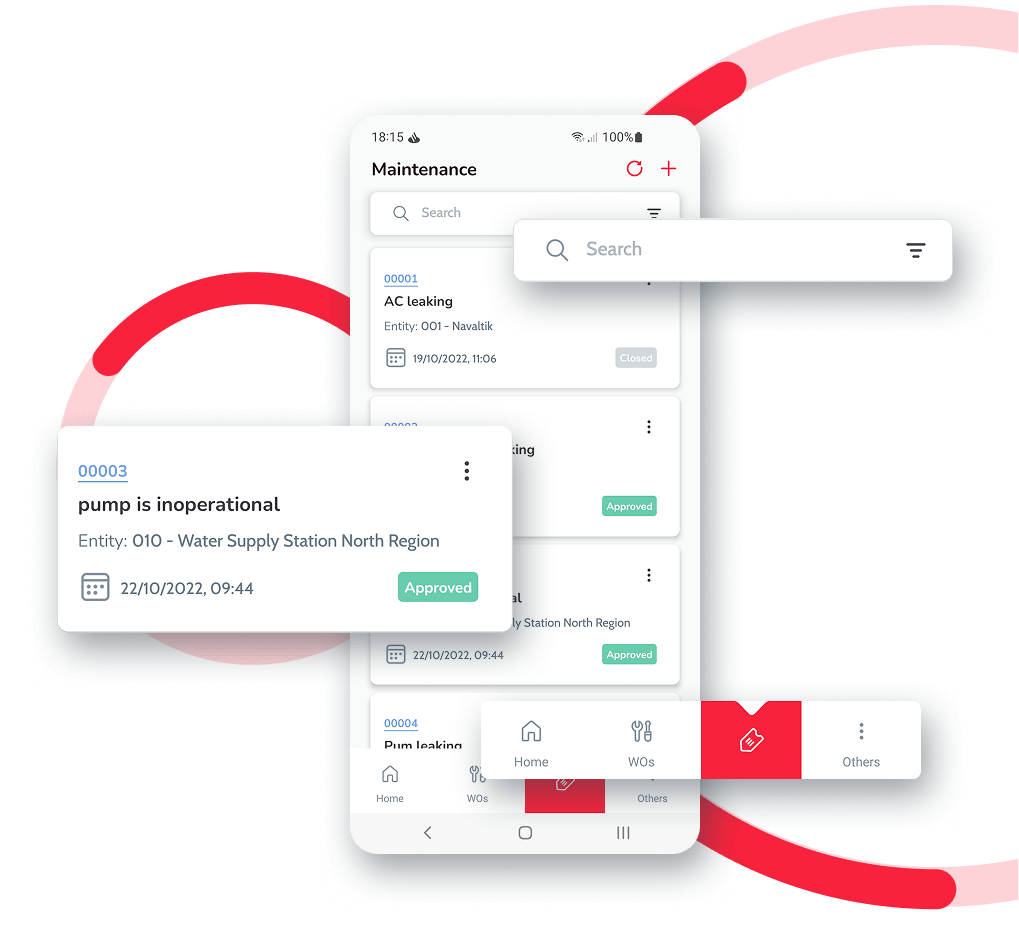
Join ManWinWin Software, the world’s most experienced company in CMMS!
Choose a better way to manage your Maintenance
Watch or book a Demo
Watch a recorded demo or get to know ManWinWin guided by one of our experts.
Use ManWinWin free version
Free forever industrial maintenance management software up to 100 Assets. Start today!
4. Frequently asked questions about cmms and inventory
dummy
1. What is the main reason a cmms reduces inventory cost
The main reason is control. A CMMS links parts usage to actual work orders, so stock decisions are based on real demand instead of habit, memory, or warehouse folklore.
2. Can a cmms reduce stock without increasing downtime
Yes, if the reduction is based on consumption, lead time, and asset criticality. Cutting stock blindly is risky; reducing stock with data is maintenance discipline.
3. How fast can inventory savings appear after cmms deployment
Some improvements appear within a few months, especially stock accuracy and duplicate-item cleanup. Larger savings usually take longer because they depend on process adoption and cleaner master data.
4. What data must be reliable for cmms inventory control
Part codes, stock quantities, asset linkage, work order consumption, and supplier lead times. If those are wrong, the system will simply produce confident-looking nonsense faster.
5. Does a cmms help with obsolete parts
Yes. It identifies slow-moving and non-moving items so maintenance and procurement teams can decide whether to keep, reclassify, transfer, or remove them.
6. Why is asset criticality important in spare parts stocking
Because not every asset failure has the same business impact. Critical assets justify higher service levels and tighter availability targets, while low-criticality assets can be stocked more leanly.
Discover ManWinWin services in maintenance management consulting

Implementation
The implementation consultancy is the component that turns a good software into a good solution.
Training
Training is the component that consolidates and sustains the solution on the client.
Ready to take your maintenance to the next level?
Trusted in over 120 countries – join the global maintenance movement with ManWinWin Software

Conclusion: How a CMMS reduces parts inventory costs by 30 percent
Reducing spare parts inventory is not a warehouse exercise; it is a maintenance control exercise. A CMMS makes that possible by tying parts consumption to work orders, assets, failure patterns, and replenishment logic, which is how organizations cut excess stock without creating avoidable downtime.
The five mechanisms are straightforward: cleaner part data, demand-based replenishment, criticality-based stocking, visibility across locations, and the removal of obsolete items. Put together, they lower inventory value, improve service level, and reduce the usual chaos that drives emergency purchasing. Not glamorous, but effective — which is usually better in maintenance.
ManWinWin Software is a strong fit for this model because it gives maintenance teams a structured, scalable way to manage inventory and execution across industrial and multi-site environments.
It sits between lightweight SaaS tools and heavy enterprise EAM suites, offering the discipline needed for reliable maintenance management without burying teams under unnecessary complexity.
How to buy ManWinWin Software
Find the solution that best fits your organization

Express
Free version up to 100 assets for small companies
Free Forever
Requires simple registration
Lifetime license
Up to 100 Assets

Start
Lifetime license up to 250 assets for small companies
599€
Lifetime license
Lifetime license
Up to 250 Assets

Professional
SaaS solution for small and medium companies
39€
Per User per Month
Yearly
Unlimited Assets

Business
Personalized solution for medium and large companies
Contact us
For custom quote
Lifetime / Yearly
Unlimited Assets













About the Author
José Fernandes is the Managing Partner at ManWinWin Software (Navaltik Management), leading company in maintenance management consultancy and CMMS (Computerized Maintenance Management System) solutions.
With a technical background in industrial organization, José Fernandes has been with Navaltik since the 1990s, progressing from consultant to strategic leader and a key figure in the development of the ManWinWin software.
Throughout his career, he has overseen hundreds of maintenance system implementations across more than 30 countries, including regions in Africa, Australia, the Middle East, and East Asia.

