
Maintenance software challenges for multisite implementation
Just a 23-minute read
Multi-site maintenance operations are complex, especially when different languages, currencies, and access levels are involved.
A CMMS designed for multisite implementation can unify these variables, streamline workflows, and improve asset reliability across locations.

Introduction
Managing maintenance across multiple facilities presents unique challenges. Each site may operate under a different currency, language, or organizational structure. Without a structured CMMS, tracking costs, maintenance schedules, and asset performance becomes chaotic, leading to inefficiencies and higher operational risk.
The technical solution lies in a CMMS that supports multiple languages, local and central currencies, and fine-grained access control. When each site is treated as a top-level cost center, maintenance managers can gain full visibility into performance metrics, costs, and compliance without losing the nuance of local operations.
1. Understanding multisite CMMS challenges
Balancing local autonomy and central control
Each site needs to operate independently—creating, executing, and closing work orders in its local language and currency—while corporate management requires standardized data for reporting and decision-making. Achieving this balance is a core challenge in multisite CMMS implementation.
Multi-language interface issues
Different sites may operate in different languages. Without proper language support, instructions can be misunderstood, training becomes inconsistent, and maintenance errors increase. A CMMS must allow seamless switching between local and corporate languages without compromising workflow consistency.
Multi-currency management
Sites may handle procurement, labor, and materials in local currencies. Central management, however, needs consolidated financial data in a single corporate currency. The CMMS must support automatic currency conversion while preserving accurate local transaction records for audits and budgeting.
Granular access control
Not all users should have access to all data. Permissions must be configurable by cost center, system, work order series, or individual store. Proper access control prevents unauthorized modifications, ensures data integrity, and aligns with corporate governance standards.
Standardizing maintenance practices
Even with site-specific variations, preventive maintenance schedules, asset hierarchies, and work order templates must remain standardized. Deviations lead to inefficiencies, inconsistent KPIs, and unreliable reporting. A multisite CMMS enforces standardized practices while allowing local flexibility.
ManWinWin Software is the result of 40+ years of experience and know-how

With thousands of users in 120+ countries in the World. Created by Portuguese Engineers has been improved with implementations, and listening to thousands of clients worldwide using the system.
Get a personalized demo of ManWinWin CMMS
Please fill out the form and wait for one of our specialists to contact you to schedule a date at your convenience.
- Discover how ManWinWin solves your specific challenges.
- See ManWinWin’s core features, tailored to your needs.
- Gain best practices from the world’s most experienced CMMS company, specific for your success.
- Discover your ideal ManWinWin license, investment, and timing of implementation.
2. Overcoming multisite CMMS implementation challenges
Implementing a CMMS across multiple locations comes with practical obstacles, but these can be addressed with structured strategies. The right system design, configuration, and governance model ensure that local autonomy doesn’t compromise centralized control. This chapter explores four critical areas where proper configuration resolves common multisite challenges.
1. Multi-language interface configuration
A CMMS must support all local languages for site users while maintaining a corporate default language for reporting and dashboards. This allows engineers and technicians to interact with the system naturally, reducing errors, while managers see standardized data. Effective implementation involves mapping user roles to language preferences and ensuring that critical alerts, reports, and work order instructions are accurately translated.
2. Multi-currency management strategies
Sites often operate in their local currencies, but central management needs consolidated financials. A CMMS should automatically convert local transactions to a corporate currency, maintaining historical records in the original currency. Implementing dual-currency dashboards, cost center reporting, and budget variance tracking ensures accurate decision-making and audit compliance across sites.
3. Access control by role and site
Granular permission settings are crucial. Users may need access restricted to a specific cost center, system, work order series, or even individual store locations. This prevents unauthorized modifications and ensures that each team sees only the data relevant to their responsibilities. Role-based access combined with audit trails ensures compliance and operational integrity.
4. Standardized workflows and preventive maintenance
Consistency in work order templates, preventive maintenance schedules, and asset hierarchies is vital. A multisite CMMS allows standardization while permitting site-specific adaptations when necessary. By enforcing standard procedures, managers can compare KPIs across sites, optimize resource allocation, and reduce unexpected downtime.

3. Technical implementation tips for multisite CMMS
Deploying a CMMS across multiple sites is more than software installation—it’s a structured engineering and operational exercise. Success relies on carefully planned configuration, integration, and monitoring to ensure consistency, accuracy, and usability across locations.
- One of the first steps is defining each site as a top-level cost center in the system. This ensures that maintenance costs, labor, and materials are tracked independently while allowing central aggregation in a corporate currency. Proper cost center mapping prevents financial inconsistencies and supports accurate ROI calculation on maintenance investments.
- Integration with local ERP or procurement systems is another critical aspect. Sites may have their own accounting, procurement, or inventory platforms, and the CMMS must synchronize data to avoid duplication or errors. Using standard APIs or middleware can simplify data flow while maintaining the integrity of maintenance records.
- Work order series configuration is a practical step often overlooked. Assigning series by site, system, or equipment type allows traceability, reduces errors, and simplifies reporting. When combined with role-based access, it ensures that local teams can operate independently without compromising corporate oversight.
- Finally, dashboards and analytics must be carefully designed. Managers need real-time insights into asset performance, maintenance costs, and preventive maintenance compliance across all sites. Proper configuration of KPIs, automated alerts, and centralized dashboards ensures operational visibility while avoiding information overload.
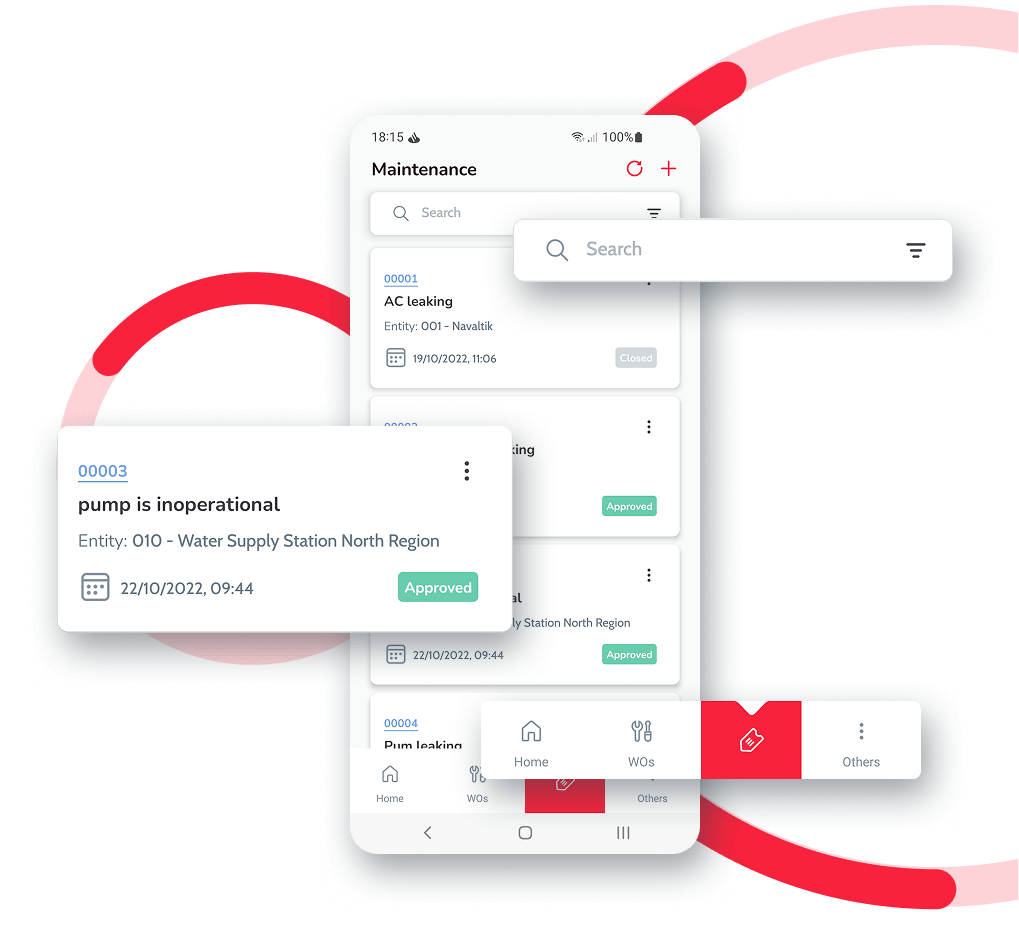
Join ManWinWin Software, the world’s most experienced company in CMMS!
Choose a better way to manage your Maintenance
Watch or book a Demo
Watch a recorded demo or get to know ManWinWin guided by one of our experts.
Use ManWinWin free version
Free forever industrial maintenance management software up to 100 Assets. Start today!
4. FAQ: multisite CMMS implementation
Common questions maintenance managers face
dummy
1. How do I manage multiple languages in a multisite CMMS?
A CMMS should allow users to operate in their local language while central reporting remains in a corporate default. Role-based language preferences and accurate translation of work orders, alerts, and reports are essential to avoid errors and ensure consistent workflows.
2. How can I handle local and central currencies simultaneously?
The system must record transactions in the site’s local currency and automatically convert them into a central corporate currency. Dual-currency dashboards, cost center reporting, and variance tracking provide accurate consolidated financial insights.
3. Can access be controlled at multiple levels?
Yes. Modern CMMS solutions allow permissions by cost center, system, work order series, or store. This ensures teams see only relevant data, prevents unauthorized modifications, and supports audit compliance.
4. How do I maintain consistent preventive maintenance across sites?
Standardized work order templates, asset hierarchies, and maintenance schedules are enforced through the CMMS. Local adaptations are possible without affecting overall KPI comparability, reducing unexpected downtime and resource inefficiency.
5. How can I integrate a multisite CMMS with local ERP systems?
Integration typically uses APIs or middleware to synchronize procurement, inventory, and accounting data. This avoids duplicate entries, ensures consistent cost tracking, and allows seamless reporting for central management.
6. What are the best practices for dashboards and KPIs in a multisite CMMS?
Design dashboards to consolidate key metrics like asset uptime, maintenance costs, and PM compliance across sites. Automated alerts and visual KPI indicators help managers identify issues quickly without overwhelming them with data.
Discover ManWinWin services in maintenance management consulting

Implementation
The implementation consultancy is the component that turns a good software into a good solution.
Training
Training is the component that consolidates and sustains the solution on the client.
Ready to take your maintenance to the next level?
Trusted in over 120 countries – join the global maintenance movement with ManWinWin Software

Conclusion: Managing multisite CMMS with efficiency and control
Implementing a CMMS across multiple sites is inherently complex, requiring careful management of languages, currencies, access controls, and standardized workflows. Without structured oversight, organizations risk inconsistent data, inefficient resource use, and unreliable KPIs.
A properly configured multisite CMMS provides a single source of truth while respecting local operational needs. Each site can operate in its preferred language and currency, with work orders, maintenance schedules, and reporting standardized across the organization. Granular access control ensures security and compliance, and centralized dashboards provide actionable insights for managers at all levels.
ManWinWin stands out as a globally proven platform for multisite CMMS implementation.
Positioned between lightweight SaaS tools and heavy enterprise EAM suites, it delivers structured, scalable, and practical maintenance management.
Industrial and multi-location organizations can confidently manage costs, streamline maintenance operations, and maintain asset reliability across the globe.
Join ManWinWin Software, the world’s most experienced company in CMMS!
Choose a better way to manage your Maintenance











About the Author
José Fernandes is the Managing Partner at ManWinWin Software (Navaltik Management), leading company in maintenance management consultancy and CMMS (Computerized Maintenance Management System) solutions.
With a technical background in industrial organization, José Fernandes has been with Navaltik since the 1990s, progressing from consultant to strategic leader and a key figure in the development of the ManWinWin software.
Throughout his career, he has overseen hundreds of maintenance system implementations across more than 30 countries, including regions in Africa, Australia, the Middle East, and East Asia.

