BLOG – ManWinWin Software
Understand the 3 main types of Maintenance and discover your perfect mix
Explore the three primary maintenance types and learn how to achieve your ideal mix for optimal performance. Discover the perfect solutions for your maintenance needs.

Introduction
From the proactive stance of preventive maintenance to the data-driven precision of predictive maintenance and the reactive nature of corrective maintenance, each strategy offers distinct pathways to uphold equipment reliability and streamline operations. As organizations strive to strike the delicate balance between minimizing downtime and controlling costs, mastering the intricacies of these maintenance approaches becomes paramount in achieving sustained success and competitiveness.
Through this exploration, we invite you to uncover the essential principles underlying each maintenance type and forge your ideal maintenance mix. By harnessing the power of preventive, predictive, and corrective strategies in harmony, you can unleash the full potential of your assets, enhance operational efficiency, and drive greater value for your organization.
1. Introduction to Maintenance Management
Maintenance serves as the cornerstone of operational efficiency by ensuring the uninterrupted functioning of equipment and facilities. It plays a vital role in preventing unexpected breakdowns, reducing downtime, and maintaining product quality. Without effective maintenance management, organizations risk facing costly repairs, production delays, and compromised safety standards.
Concept of Maintenance Strategies: Maintenance strategies encompass a range of approaches aimed at preserving asset reliability and performance. These strategies include preventive maintenance, predictive maintenance, and corrective maintenance. Each strategy offers distinct methodologies for addressing equipment maintenance needs, from proactive maintenance tasks to reactive repairs based on asset condition and operational requirements.
Significance of Finding the Right Mix: Finding the optimal mix of maintenance strategies is crucial for maximizing asset uptime while minimizing costs. Organizations must strike a balance between preventive measures to proactively address potential issues, predictive techniques leveraging data analytics to forecast maintenance needs, and corrective actions to swiftly resolve unexpected failures. The right mix of maintenance strategies can enhance operational efficiency, extend asset lifespan, and improve overall productivity.
Objective of Exploration: This introductory overview sets the stage for a deeper exploration of preventive, predictive, and corrective maintenance techniques. By understanding the importance of maintenance management and the significance of finding the perfect mix of strategies, organizations can lay the foundation for optimizing performance, reducing operational expenses, and achieving sustained success in today’s competitive business environment.
ManWinWin Software is the result of 40+ years of experience and know-how
With thousands of users in 120+ countries in the World. Created by Portuguese Engineers has been improved with implementations, and listening to thousands of clients worldwide using the system, their day-to-day struggles, their needs and wants.
We have helped companies around the world to improve their maintenance

Recognized
By Gartner Group

Microsoft Partner
Application Development
Customers
Countries
Languages
Partners
2. Exploring the Three Main Types of Maintenance
Three primary types of maintenance strategies – preventive, predictive, and corrective – are employed to address different maintenance needs and challenges. Understanding the principles, advantages, and limitations of each type is essential for efficient maintenance management. This section explores these maintenance strategies, providing insights into their implementation through real-world examples.
Preventive Maintenance
Preventive maintenance involves routine inspections, servicing, and repairs conducted at predetermined intervals to prevent equipment failure and minimize downtime.
Advantages:
- Reduces the likelihood of unexpected breakdowns and costly repairs.
- Extends the lifespan of equipment and assets.
- Improves safety and operational reliability.
Limitations:
- May lead to unnecessary maintenance activities if not properly planned.
- Costs associated with regular maintenance can be high.
- Does not account for unexpected failures that may occur between scheduled maintenance intervals.
Real-world Example:
A manufacturing plant conducts monthly equipment inspections and lubrication to prevent machine failures and ensure consistent production output.
Predictive Maintenance
Predictive maintenance utilizes data analysis and condition monitoring techniques to predict when equipment failure is likely to occur, allowing for maintenance to be performed just in time.
Advantages:
- Enables proactive maintenance based on actual equipment condition, reducing downtime.
- Optimizes maintenance schedules and resource allocation.
- Minimizes unnecessary maintenance tasks, leading to cost savings.
Limitations:
- Requires sophisticated monitoring equipment and data analysis tools.
- Initial setup costs can be high.
- Relies heavily on accurate data and predictive algorithms.
Real-world Example:
An airline uses sensors and predictive analytics to monitor the condition of aircraft engines, scheduling maintenance only when necessary to avoid flight delays and cancellations.
Corrective Maintenance
Corrective maintenance involves repairing or replacing equipment after it has failed, with the primary goal of restoring functionality as quickly as possible.
Advantages:
- Immediate response to equipment failures, minimizing downtime.
- Lower upfront costs compared to preventive and predictive maintenance.
- Suitable for equipment with low criticality or redundancy.
Limitations:
- Increased risk of unexpected breakdowns and production losses.
- May result in higher repair costs if equipment damage is extensive.
- Does not address underlying issues that contribute to recurring failures.
Real-world Example:
A facility relies on corrective maintenance for non-critical lighting systems, responding to bulb failures as they occur rather than implementing routine replacements.
Each type of maintenance strategy – preventive, predictive, and corrective – offers distinct advantages and challenges. By understanding the principles behind these strategies and their real-world applications, organizations can develop comprehensive maintenance programs tailored to their specific needs. Integrating a combination of these strategies can enhance equipment reliability, minimize downtime, and optimize maintenance costs, ultimately contributing to improved operational efficiency and longevity of assets.
3. Achieving the Perfect Mix
Designing an effective maintenance plan involves striking the right balance between preventive, predictive, and corrective maintenance strategies. However, determining the ideal combination requires careful consideration of various factors unique to each organization. This section explores key considerations for achieving the perfect mix of maintenance strategies tailored to specific needs and objectives.
Asset Criticality
- Assess the criticality of each asset to the organization’s operations and objectives.
- Prioritize preventive and predictive maintenance for critical assets to minimize downtime and maximize reliability.
- Allocate resources accordingly, focusing preventive efforts on high-value assets while implementing corrective maintenance for less critical equipment.
Cost-effectiveness
- Evaluate the total cost of ownership (TCO) for each maintenance strategy, considering both direct and indirect costs.
- Compare the upfront investment, ongoing maintenance expenses, and potential savings from reduced downtime and repairs.
- Optimize the maintenance budget by selecting a mix of strategies that offer the best return on investment (ROI) while meeting performance requirements.
Available Resources
- Assess the organization’s internal capabilities and external partnerships for implementing different maintenance approaches.
- Determine the availability of skilled personnel, specialized equipment, and technological infrastructure needed for predictive maintenance.
- Consider outsourcing certain maintenance activities or investing in training and development to build in-house expertise.
Equipment Reliability and Failure Patterns:
- Analyze historical data on equipment failures and performance trends to identify patterns and root causes.
- Use predictive analytics and condition monitoring techniques to forecast potential failures and prioritize proactive maintenance actions.
- Adjust the maintenance strategy mix based on evolving equipment reliability and failure patterns over time.
Regulatory and Industry Standards:
- Stay informed about regulatory requirements and industry best practices relevant to maintenance management.
- Ensure compliance with safety, environmental, and quality standards when designing and implementing maintenance plans.
- Incorporate industry benchmarks and performance metrics to benchmark against peers and continuously improve maintenance practices.
Achieving the perfect mix of maintenance strategies requires a holistic approach that considers asset criticality, cost-effectiveness, available resources, equipment reliability, and regulatory requirements. By carefully balancing preventive, predictive, and corrective maintenance approaches, organizations can optimize asset performance, minimize downtime, and maximize return on investment. Continuous monitoring, evaluation, and adaptation are essential to fine-tune the maintenance strategy mix and ensure alignment with evolving business needs and objectives.
Join ManWinWin Software, the world’s most experienced company in CMMS!
Choose a better way to manage your Maintenance
Watch or book a Demo
Watch a recorded demo or get to know ManWinWin guided by one of our experts.
Use ManWinWin free version
Free forever industrial maintenance management software up to 100 Assets. Start today!
4. Implementation and Optimization
Implementing and refining a maintenance strategy requires careful planning, execution, and continuous improvement. This section outlines practical steps for organizations to effectively implement and optimize their maintenance programs, leveraging data, technology, and performance metrics to enhance asset reliability and efficiency.
Data Collection and Analysis
Establishing a robust data collection process is fundamental for gathering information on equipment performance, maintenance history, and failure patterns. Organizations should utilize sensors, monitoring systems, and maintenance management software to automate data collection and streamline analysis. By applying data analytics techniques, they can identify trends, predict failures, and optimize maintenance schedules.
Leveraging Technology for Predictive Maintenance
Investing in predictive maintenance technologies such as vibration analysis, infrared thermography, and oil analysis is crucial for monitoring equipment health in real-time. Integration of sensor data with predictive analytics algorithms enables the detection of anomalies and prediction of potential failures before they occur. Organizations should implement a condition-based maintenance approach, where maintenance activities are triggered based on equipment condition rather than fixed schedules.
Establishing Key Performance Indicators (KPIs)
Defining Key Performance Indicators (KPIs) aligned with organizational goals, such as equipment uptime, mean time between failures (MTBF), and maintenance costs, is essential. Regular tracking and measurement of KPIs help assess the effectiveness of the maintenance program and identify areas for improvement. Organizations should use KPIs to communicate performance metrics to stakeholders and drive continuous improvement efforts.
Continuous Improvement
Fostering a culture of continuous improvement within the maintenance team is critical, encouraging feedback, collaboration, and innovation. Regular reviews and audits of maintenance processes and procedures help identify inefficiencies and opportunities for optimization. Implementing a formalized feedback loop to capture lessons learned and incorporate them into future maintenance planning and execution is essential.
Training and Development
Providing ongoing training and development opportunities for maintenance personnel is crucial to enhance skills and knowledge in emerging technologies and best practices. Encouraging cross-functional collaboration between maintenance, operations, and engineering teams fosters diverse expertise and perspectives. Organizations should foster a culture of learning and knowledge sharing to empower employees to contribute to the optimization of the maintenance program.
Effective implementation and optimization of maintenance strategies require a systematic approach that integrates data-driven decision-making, technology adoption, performance measurement, and continuous improvement. By following practical steps outlined in this section, organizations can enhance asset reliability, minimize downtime, and maximize the return on investment in maintenance activities. Continuous refinement and adaptation of the maintenance program over time enable organizations to stay agile and responsive to evolving business needs and technological advancements.
Discover ManWinWin services in maintenance management consulting

Implementation
The implementation consultancy is the component that turns a good software into a good solution.
Training
Training is the component that consolidates and sustains the solution on the client.
Audit & Diagnosis
Evaluation and systematization of the client’s case. Before and after implementation.

Want to know how the world’s most experienced CMMS maintenance management software can help you?
ManWinWin Software: Discovering the Perfect Mix of Maintenance Strategies
ManWinWin is a comprehensive Computerized Maintenance Management System (CMMS) designed to assist organizations in understanding, implementing, and optimizing the three main types of maintenance: preventive, predictive, and corrective. Here’s how ManWinWin software can help organizations discover the perfect mix of maintenance strategies:
Preventive Maintenance
ManWinWin facilitates the scheduling of recurring maintenance tasks based on time, meter readings, or other criteria, ensuring timely execution of preventive activities. The software provides reminders and notifications for upcoming preventive maintenance tasks, helping users stay proactive in their maintenance efforts. Customizable checklists and procedures within ManWinWin ensure consistency and thoroughness in preventive maintenance activities, enhancing equipment reliability. Users can track maintenance history and equipment performance metrics using ManWinWin, allowing for evaluation of the effectiveness of preventive maintenance measures over time.
Predictive Maintenance
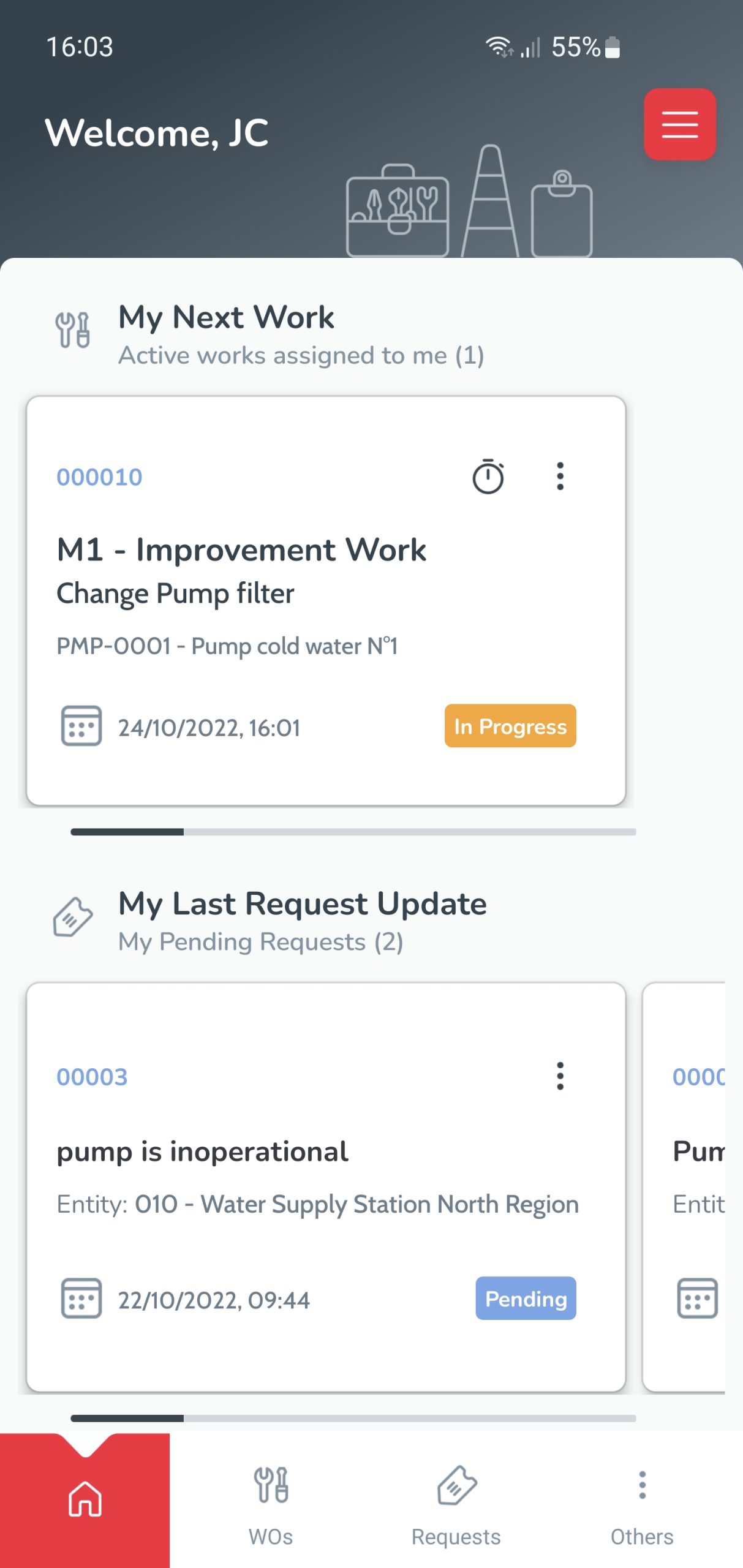
ManWinWin integrates seamlessly with sensors and monitoring devices to collect real-time data on equipment health and performance. Through predictive analytics capabilities, ManWinWin analyzes historical data and trends to identify potential failure patterns, enabling proactive maintenance actions. The software offers predictive maintenance dashboards and reports, empowering users to visualize equipment condition and prioritize maintenance tasks based on criticality. With ManWinWin, organizations can transition from reactive to proactive maintenance approaches, reducing downtime and extending equipment lifespan through timely interventions.
Corrective Maintenance
ManWinWin allows users to record and track unplanned maintenance events, such as equipment breakdowns and repairs, ensuring efficient management of corrective actions. The software provides workflows and escalation processes for handling corrective maintenance requests promptly, from submission to resolution. By analyzing root causes of equipment failures and tracking downtime metrics, ManWinWin helps identify opportunities for improvement and preventive measures. Users can leverage ManWinWin’s corrective maintenance capabilities to minimize disruptions and optimize equipment reliability through timely interventions.
ManWinWin software serves as a powerful tool for organizations seeking to discover the perfect mix of maintenance strategies. By leveraging its features for preventive, predictive, and corrective maintenance, organizations can enhance asset reliability, minimize downtime, and maximize operational efficiency. With ManWinWin, organizations can analyze data, optimize maintenance schedules, and continuously refine their maintenance strategy mix to align with their goals and objectives effectively.
Join ManWinWin Software, the world’s most experienced company in CMMS!
Choose a better way to manage your Maintenance