
Strategies to extend equipment lifespan with condition-based maintenance
Just a 24-minute read
Condition-based maintenance (CBM) enables maintenance teams to extend equipment lifespan by acting on real asset condition instead of fixed schedules.
When correctly implemented, CBM reduces unnecessary interventions, prevents secondary damage, and supports technically justified maintenance decisions.

Table of contents
1. Understanding degradation mechanisms and measurable condition indicators
2. Maintenance decision-making based on condition trends, not alarms
3. Integrating condition data with maintenance history and failure analysis
4. Structuring condition-based maintenance within a CMMS environment
Conclusion – Implementing condition-based maintenance to extend equipment lifespan
Introduction
Extending the useful life of industrial equipment is not achieved by increasing maintenance frequency, but by intervening at the right moment and for the right technical reason. Traditional time-based maintenance often leads to premature part replacement or late interventions that accelerate wear, increase failure probability, and shorten asset life.
Condition-based maintenance shifts the decision logic from time to condition. By continuously or periodically monitoring degradation indicators—such as vibration, temperature, lubrication condition, electrical parameters, or performance drift—maintenance actions are triggered by actual equipment behaviour. This approach allows maintenance managers to control degradation mechanisms, slow down failure progression, and preserve asset integrity over a longer operational period.
1. Understanding degradation mechanisms and measurable condition indicators
Extending equipment lifespan through condition-based maintenance requires a precise understanding of how and why assets degrade. Degradation is not random; it follows physical mechanisms that can be observed, measured, and controlled if the correct indicators are selected and interpreted correctly.
Each asset type has dominant failure mechanisms linked to its function, operating regime, environment, and design limits. Rotating equipment is mainly affected by fatigue, wear, imbalance, misalignment, and lubrication degradation. Electrical assets degrade through insulation ageing, thermal stress, partial discharge, and contamination. Static equipment is exposed to corrosion, erosion, fouling, and structural fatigue. Condition-based maintenance must be designed around these mechanisms, not around generic monitoring technologies.
Identifying dominant failure modes at component level
Condition-based maintenance must be applied at component level, not at equipment level. A motor, for example, does not fail as a single entity; failures occur in bearings, windings, shafts, cooling systems, or electrical connections. Each component degrades differently and requires specific indicators.
The first technical step is to identify dominant failure modes using historical failure data, failure mode and effects analysis (FMEA), or reliability studies. Only failure modes with a measurable degradation phase are suitable for CBM. Sudden, random failures without detectable precursors should be managed through design improvements or redundancy, not condition monitoring.
This selection ensures that CBM efforts focus on components where early detection can truly prevent damage and extend useful life.
Selecting condition indicators linked to physical degradation
A condition indicator is only useful if it is directly linked to a physical degradation process. Monitoring should not be driven by sensor availability but by failure physics.
Examples include:
- Vibration amplitude, frequency, and spectral patterns linked to bearing wear, imbalance, or misalignment
- Oil analysis indicators such as particle count, viscosity, water content, and wear metals reflecting lubrication breakdown or internal wear
- Temperature trends indicating friction increase, insulation ageing, or cooling inefficiency
- Electrical parameters such as current imbalance, insulation resistance, or harmonic distortion signalling electrical degradation
- Performance indicators such as flow, pressure, or efficiency loss revealing internal wear or fouling
Indicators must be chosen to detect degradation early enough to allow corrective action before functional failure, while avoiding excessive sensitivity that leads to false alarms.
Defining meaningful thresholds and degradation stages
To extend equipment lifespan, condition thresholds must reflect degradation stages, not arbitrary limits. Alarm values based solely on standards or manufacturer recommendations often fail to account for real operating conditions.
Effective CBM uses multiple thresholds:
- A baseline representing normal operating condition
- A warning level indicating abnormal degradation onset
- A critical level approaching functional failure
These thresholds should be adjusted based on operating load, duty cycle, environment, and asset criticality. More importantly, thresholds should evolve as maintenance teams gain knowledge from historical condition and failure data.
This approach allows maintenance actions to be planned while degradation is still reversible, avoiding secondary damage that permanently reduces asset life.
Measurement quality and data consistency
- Condition-based maintenance is only as reliable as the quality and consistency of the data collected. Inconsistent measurement points, variable sensor placement, irregular sampling intervals, or changing operating conditions can distort trends and lead to incorrect conclusions.
- Measurement procedures must be standardised: same location, same method, same operating condition, and same data acquisition parameters. Without this discipline, apparent degradation may simply reflect measurement noise rather than real physical change.
- Reliable condition data enables maintenance teams to detect subtle degradation trends, intervene with precision, and slow down wear mechanisms instead of accelerating them through unnecessary or poorly timed maintenance actions.
- By grounding condition-based maintenance in degradation physics and measurable indicators, maintenance managers establish the technical foundation required to systematically extend equipment lifespan.
ManWinWin Software is the result of 40+ years of experience and know-how

With thousands of users in 120+ countries in the World. Created by Portuguese Engineers has been improved with implementations, and listening to thousands of clients worldwide using the system.
Get a personalized demo of ManWinWin CMMS
Please fill out the form and wait for one of our specialists to contact you to schedule a date at your convenience.
- Discover how ManWinWin solves your specific challenges.
- See ManWinWin’s core features, tailored to your needs.
- Gain best practices from the world’s most experienced CMMS company, specific for your success.
- Discover your ideal ManWinWin license, investment, and timing of implementation.
You can opt to watch a recorded demo of ManWinWin at your own pace (watch a recorded demo here)
2. Maintenance decision-making based on condition trends, not alarms
Condition-based maintenance only extends equipment lifespan when maintenance decisions are driven by degradation behaviour, not by isolated alarms or single measurements. Alarms indicate that a limit has been reached; trends explain how fast the asset is degrading and whether intervention is technically justified.
Focusing on alarms alone often results in premature interventions or late reactions. Both situations reduce asset life: early interventions introduce unnecessary disassembly and re-assembly risks, while late actions allow degradation to propagate into secondary damage.
From static limits to dynamic trend evaluation
Static alarm limits assume that all assets degrade at the same rate and under the same conditions. In practice, degradation speed varies with load, operating regime, environmental factors, and maintenance quality.
Trend analysis evaluates the rate of change of condition indicators over time. A stable trend close to a warning limit may not require immediate action, while a rapidly accelerating trend still below the alarm threshold often requires urgent intervention.
Maintenance decisions should therefore be based on:
- Trend slope and acceleration
- Pattern changes in condition signals
- Correlation between multiple indicators (for example vibration and temperature)
Estimating remaining useful life from condition behaviour
One of the main technical advantages of CBM is the ability to estimate remaining useful life (RUL). RUL is not a fixed value; it is a prediction derived from degradation trends and failure progression models.
By analysing historical condition data and known failure behaviour, maintenance managers can forecast when a condition indicator will reach a critical level. This enables maintenance interventions to be scheduled within an optimal time window: late enough to maximise component utilisation, but early enough to avoid irreversible damage.
RUL-based decisions reduce emergency interventions, minimise collateral damage, and significantly contribute to extending equipment lifespan.
Avoiding secondary damage through controlled intervention timing
A key objective of condition-based maintenance is to prevent secondary damage. Many failures do not destroy a component immediately but progressively damage adjacent parts, foundations, housings, or transmission systems.
For example, a deteriorating bearing may initially be repairable. If left unchecked, it can damage shafts, seals, couplings, and even the driven equipment. Trend-based decisions allow maintenance teams to intervene while degradation is still localised and reversible.
Correct timing of intervention preserves not only the failed component but the entire asset system, directly extending overall equipment life.
Supporting technical decisions with documented condition history
Trend-based maintenance decisions must be traceable and technically justified. Documenting condition evolution, decisions taken, and intervention outcomes creates a technical decision history that improves future judgement.
This documented knowledge allows maintenance teams to refine thresholds, improve RUL estimation accuracy, and standardise decision criteria across assets and technicians. Over time, this reduces subjective decision-making and ensures consistent application of CBM principles.
By shifting maintenance decision-making from alarm-driven reactions to trend-based technical evaluation, condition-based maintenance becomes a controlled engineering process focused on preserving equipment health and extending asset lifespan.
3. Integrating condition data with maintenance history and failure analysis
Condition-based maintenance reaches its full potential only when condition monitoring data is analysed in context. Condition indicators show how an asset is degrading, but they do not explain why degradation occurs or whether previous maintenance actions were effective. To extend equipment lifespan, condition data must be integrated with maintenance history, failure records, and operational information.
Without this integration, maintenance teams risk treating symptoms instead of causes, repeating ineffective interventions, and allowing the same degradation mechanisms to reappear.
Correlating condition trends with past maintenance actions
Every maintenance intervention modifies the degradation trajectory of a component. Bearing replacement, alignment correction, lubrication changes, or operating adjustments should all produce a measurable impact on condition indicators.
By correlating condition trends before and after interventions, maintenance managers can evaluate whether:
- The intervention was technically effective
- The root cause was properly addressed
- The degradation rate was reduced or merely reset temporarily
If a condition indicator returns to normal but degrades again at an accelerated rate, this often indicates incomplete root cause correction, such as poor installation, incorrect lubrication practices, or persistent misalignment.
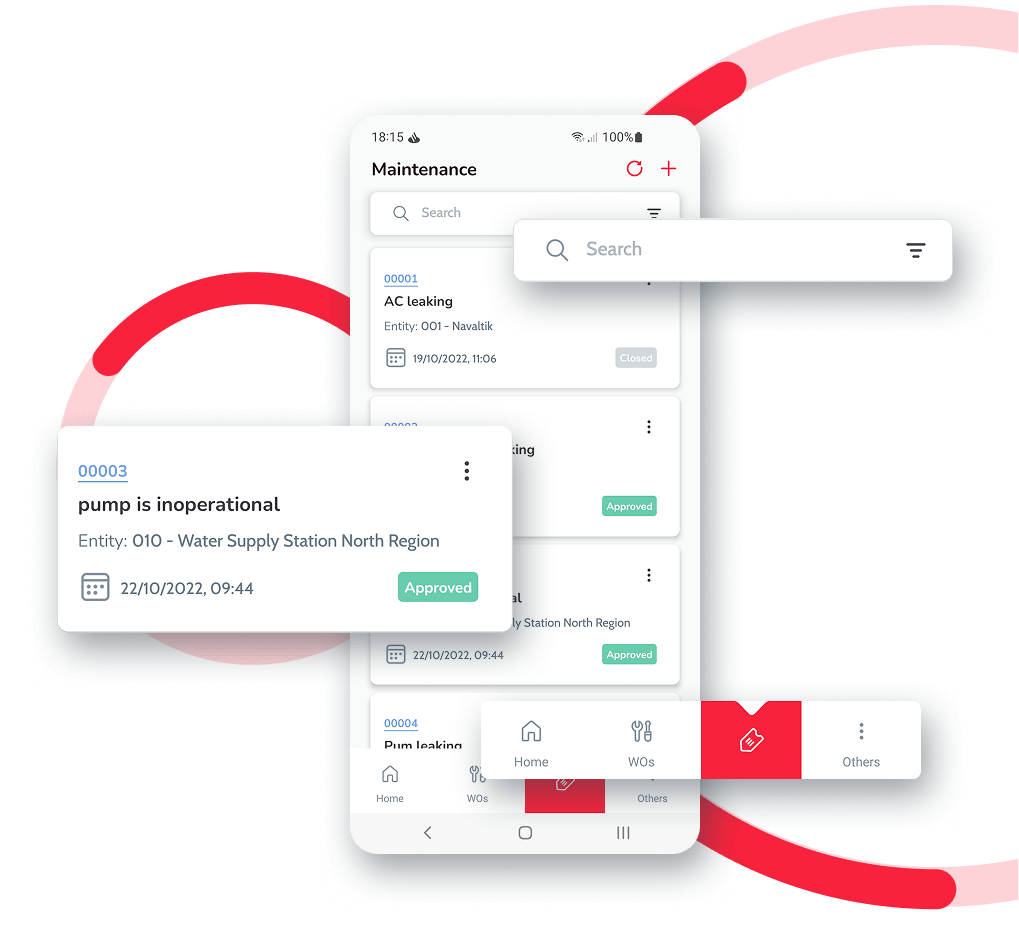
This correlation transforms maintenance history from administrative records into a technical knowledge base that supports asset life extension.
Using failure analysis to refine condition-based strategies
Failure records provide essential feedback for improving CBM strategies. Each failure should be analysed to determine whether detectable condition indicators existed before functional failure and whether they were correctly interpreted.
Failure analysis helps answer critical questions:
- Was the failure mode suitable for condition-based monitoring?
- Were the correct indicators selected?
- Were thresholds and trend interpretations adequate?
- Was the intervention delayed, premature, or ineffective?
This feedback allows maintenance teams to refine monitoring techniques, adjust thresholds, and improve decision rules. Over time, CBM becomes more precise and more effective at preventing damage.
Identifying recurring degradation patterns and systemic issues
When condition data, maintenance history, and failure records are analysed together, recurring degradation patterns become visible. These patterns often point to systemic issues rather than isolated component problems.
- Repeated bearing failures linked to alignment practices
- Accelerated wear associated with specific operating regimes
- Lubrication degradation caused by contamination or incorrect storage
- Thermal stress resulting from inadequate cooling or overload
Addressing these systemic issues slows degradation across multiple assets, producing a cumulative extension of equipment lifespan at plant level.
Creating a closed-loop learning process for asset life extension
Integrating condition data with historical maintenance and failure analysis creates a closed-loop learning process. Monitoring detects degradation, maintenance acts on it, and analysis evaluates the outcome.
This loop enables continuous improvement of:
- Maintenance task content and intervals
- Condition indicator selection and thresholds
- Root cause elimination strategies
- Asset-specific maintenance rules
By institutionalising this learning process, maintenance teams move from reactive repairs to engineered degradation control. Equipment lifespan is no longer extended by chance, but by accumulated technical knowledge and disciplined analysis.
Join ManWinWin Software, the world’s most experienced company in CMMS!
Choose a better way to manage your Maintenance
Watch or book a Demo
Watch a recorded demo or get to know ManWinWin guided by one of our experts.
Use ManWinWin free version
Free forever industrial maintenance management software up to 100 Assets. Start today!
4. Structuring condition-based maintenance within a CMMS environment
Condition-based maintenance cannot rely on individual expertise, spreadsheets, or isolated monitoring tools. To consistently extend equipment lifespan, CBM must be structured, standardised, and traceable within a CMMS that supports technical maintenance decision-making.
A CMMS provides the framework to transform condition data into actionable maintenance knowledge and ensures that condition-based strategies are applied uniformly across assets and over time.
Linking condition indicators to assets and components
For CBM to be effective, condition indicators must be formally linked to the correct asset hierarchy and component level. Monitoring vibration, temperature, or oil condition without clear association to specific components reduces technical clarity and limits analysis.
Within a CMMS, each asset and component should have:
- Defined condition indicators
- Measurement methods and frequencies
- Associated degradation mechanisms
- Relevant thresholds and evaluation criteria
This structure ensures that condition data is interpreted consistently and supports technically sound maintenance decisions.
Integrating condition observations with maintenance workflows
Condition-based findings must directly influence maintenance planning and execution. A CMMS enables condition observations to trigger structured workflows, such as:
- Condition-based work requests
- Planned corrective interventions based on degradation severity
- Follow-up inspections to validate intervention effectiveness
By embedding CBM into standard maintenance processes, interventions are no longer reactive responses but planned actions aligned with degradation behaviour. This reduces unnecessary interventions and limits the risk of introducing new defects during maintenance activities.
Preserving technical knowledge and decision traceability
One of the most important functions of a CMMS in CBM is the preservation of technical decision history. Recording condition trends, decisions taken, interventions performed, and outcomes achieved creates a traceable knowledge base.
This traceability supports:
- Consistent decision-making across different technicians
- Objective evaluation of maintenance effectiveness
- Continuous improvement of thresholds and decision rules
- Reduced dependence on individual experience
Over time, this accumulated knowledge becomes a critical asset for extending equipment lifespan across the organisation.
Using ManWinWin as a structured platform for condition-based maintenance
A CMMS such as ManWinWin provides the necessary structure to support condition-based maintenance as an engineering discipline rather than an informal practice. By centralising asset hierarchies, condition indicators, maintenance history, and failure data, ManWinWin enables maintenance managers to control degradation systematically.
ManWinWin allows condition observations to be linked directly to assets, converted into technically justified maintenance actions, and evaluated over time. This structured approach supports consistent degradation control, reduces secondary damage, and helps maintenance teams apply condition-based maintenance as a long-term strategy for extending equipment lifespan.
When CBM is embedded within a CMMS environment, it becomes repeatable, measurable, and scalable—key conditions for preserving asset value and extending operational life.
Discover ManWinWin services in maintenance management consulting

Implementation
The implementation consultancy is the component that turns a good software into a good solution.
Training
Training is the component that consolidates and sustains the solution on the client.
Ready to take your maintenance to the next level?
Trusted in over 120 countries – join the global maintenance movement with ManWinWin Software

Conclusion – Implementing condition-based maintenance to extend equipment lifespan
Condition-based maintenance is a technical strategy, not a reactive practice. By monitoring asset condition, analysing trends, and acting on measurable degradation indicators, maintenance teams can extend equipment lifespan, reduce secondary damage, and optimise maintenance resources. The key to success lies in understanding degradation mechanisms, selecting the right condition indicators, making decisions based on trends rather than isolated alarms, and continuously learning from maintenance history and failure analysis.
Integrating condition-based maintenance within a structured CMMS ensures consistency, traceability, and technically justified actions. ManWinWin provides the framework to centralise condition data, link indicators to asset hierarchies, manage thresholds, track interventions, and analyse trends over time. By combining condition monitoring with structured workflows and historical knowledge, maintenance managers can apply CBM as a long-term, systematic approach to preserving equipment integrity and maximising operational life.
With this disciplined approach, condition-based maintenance becomes more than a monitoring tool—it becomes a strategic methodology for engineering asset longevity, reinforcing ManWinWin’s position as a trusted, knowledge-driven CMMS solution for modern maintenance management.
Join ManWinWin Software, the world’s most experienced company in CMMS!
Choose a better way to manage your Maintenance












About the Author
José Fernandes is the Managing Partner at ManWinWin Software (Navaltik Management), leading company in maintenance management consultancy and CMMS (Computerized Maintenance Management System) solutions.
With a technical background in industrial organization, José Fernandes has been with Navaltik since the 1990s, progressing from consultant to strategic leader and a key figure in the development of the ManWinWin software.
Throughout his career, he has overseen hundreds of maintenance system implementations across more than 30 countries, including regions in Africa, Australia, the Middle East, and East Asia.