
Unplanned downtime and revenue leak benchmarks for 2026
Just a 23-minute read
Unplanned downtime is causing a revenue leak of 1.4 trillion dollars in 2026, equivalent to 11 percent of global revenue, up 62 percent since 2019.
Measuring these losses and using data-driven maintenance management is essential to benchmark performance and reduce risk.

Introduction
Unplanned downtime silently erodes industrial revenue. Recent data shows a staggering 62% increase in downtime-related costs since 2019, amounting to $1.4 trillion globally. These figures aren’t abstract—they represent lost production, wasted labor, and accelerated asset degradation. For maintenance managers, knowing the financial impact is no longer optional.
The ROI of a CMMS is directly tied to reducing these costs. When maintenance teams can track, predict, and prevent downtime, they safeguard production and profitability. Benchmarking unplanned downtime against 2026 statistics allows organizations to identify weak points and measure the true impact of maintenance strategies.
1. Financial impact of unplanned downtime
Unplanned downtime is more than an operational interruption. In 2026, unexpected stoppages are costing organizations around 1.4 trillion dollars worldwide, representing roughly 11 percent of potential revenue. These costs include lost production, idle labor, wasted energy, accelerated wear on equipment, and delays in supply chains. For maintenance managers, quantifying these losses is essential to understanding the real impact of downtime.
Cost per hour of downtime
The cost of downtime varies depending on industry and asset criticality. Manufacturing lines can lose between five and twenty-two thousand dollars per hour when a production line stops. Utilities and energy sectors may face losses of up to 250 thousand dollars per hour. Hidden costs often surpass the immediate repair expenses. Energy consumed during idle operation, rework caused by quality issues, and delayed deliveries all add to the financial burden.
Revenue leak and operational losses
Each unplanned stoppage contributes to a revenue leak of approximately 11 percent. Beyond lost output, downtime disrupts supply chains, affects delivery schedules, and can create contractual penalties. Understanding these losses as part of operational performance provides a clear picture of asset effectiveness and identifies where intervention is most needed.
Historical trends and global context
Downtime costs have risen 62 percent since 2019. Aging equipment, more complex production systems, and reliance on reactive maintenance are driving this increase. Tracking these trends and comparing them to industry benchmarks allows teams to see where they are underperforming and prioritize maintenance strategies that have the most impact.
Measuring and mitigating impact
Breaking downtime into measurable metrics such as hours lost, revenue per incident, and cost per asset helps maintenance teams see the financial consequences clearly. Proactive maintenance, predictive analytics, and systematic monitoring reduce unplanned stoppages and control revenue leaks, turning downtime from an unknown risk into a manageable metric.
ManWinWin Software is the result of 40+ years of experience and know-how

With thousands of users in 120+ countries in the World. Created by Portuguese Engineers has been improved with implementations, and listening to thousands of clients worldwide using the system.
Get a personalized demo of ManWinWin CMMS
Please fill out the form and wait for one of our specialists to contact you to schedule a date at your convenience.
- Discover how ManWinWin solves your specific challenges.
- See ManWinWin’s core features, tailored to your needs.
- Gain best practices from the world’s most experienced CMMS company, specific for your success.
- Discover your ideal ManWinWin license, investment, and timing of implementation.
2. Benchmarking downtime in 2026
Understanding how your organization compares to industry standards is essential for controlling unplanned downtime. Benchmarking allows maintenance teams to quantify performance gaps, prioritize interventions, and make informed decisions about asset management. In 2026, the global cost of downtime is 1.4 trillion dollars, and organizations are losing on average 11 percent of revenue to unplanned stoppages. Knowing how to measure and compare these losses is the first step toward reducing them.
1. Industrial asset downtime by sector
Different industries experience downtime differently. Manufacturing lines report average stoppages of 20 to 40 hours per year per critical line. Food and beverage operations often face shorter but more frequent interruptions, while utilities and energy production can have rare but extremely costly outages. Understanding sector-specific patterns helps maintenance managers allocate resources where they have the most impact.
2. Calculating downtime ROI
The return on investment from maintenance programs can be directly linked to reduced unplanned downtime. By comparing historical downtime costs with the cost of preventive or predictive interventions, teams can identify the most efficient allocation of labor, spare parts, and monitoring equipment. Organizations that implement structured maintenance can reduce downtime by 25 to 30 percent, translating into tangible financial savings.
3. Cost per incident analysis
Each unplanned stoppage carries multiple layers of cost. Direct repair expenses are often just the visible part. Indirect costs include lost production, labor inefficiencies, quality issues, and supply chain disruptions. Breaking downtime down into per-incident costs allows teams to prioritize interventions, justify maintenance budgets, and demonstrate the financial impact of improved reliability.
4. Benchmark comparison strategies
Comparing your organization’s downtime metrics with industry benchmarks highlights gaps in performance. Key indicators include mean time to repair, mean time between failures, downtime frequency, and lost production per incident. Benchmarking across these metrics reveals trends, identifies weak points in maintenance processes, and supports data-driven decisions about preventive and predictive maintenance strategies.

3. Predictive maintenance and downtime reduction
Predictive maintenance is the most effective way to reduce unplanned downtime. By monitoring asset condition and analyzing failure patterns, maintenance teams can act before equipment fails. This approach shifts maintenance from reactive firefighting to proactive planning, improving reliability and protecting revenue.
- Condition monitoring and sensors
Modern assets generate real-time data on vibration, temperature, pressure, and other critical parameters. By continuously monitoring these signals, maintenance teams can detect early warning signs of failure. This allows interventions to be scheduled at the optimal time, minimizing production interruptions and repair costs. - Failure analysis and historical data
Analyzing past failures provides insight into recurring issues and asset vulnerabilities. Tracking maintenance history, downtime incidents, and repair costs helps identify trends that predictive models can leverage. Historical data transforms intuition into evidence-based maintenance decisions. - Maintenance scheduling optimization
Scheduling maintenance based on asset condition rather than fixed intervals ensures resources are used efficiently. Work is performed when it delivers the highest value, reducing unnecessary inspections and preventing unexpected stoppages. This approach also improves workforce planning and spare parts management. - Impact on revenue and operations
Organizations that adopt predictive maintenance see measurable reductions in downtime, often 25 to 30 percent. Reduced stoppages improve asset availability, maintain production targets, and decrease the hidden costs associated with reactive repairs. Over time, these gains translate directly into recovered revenue and increased operational efficiency.
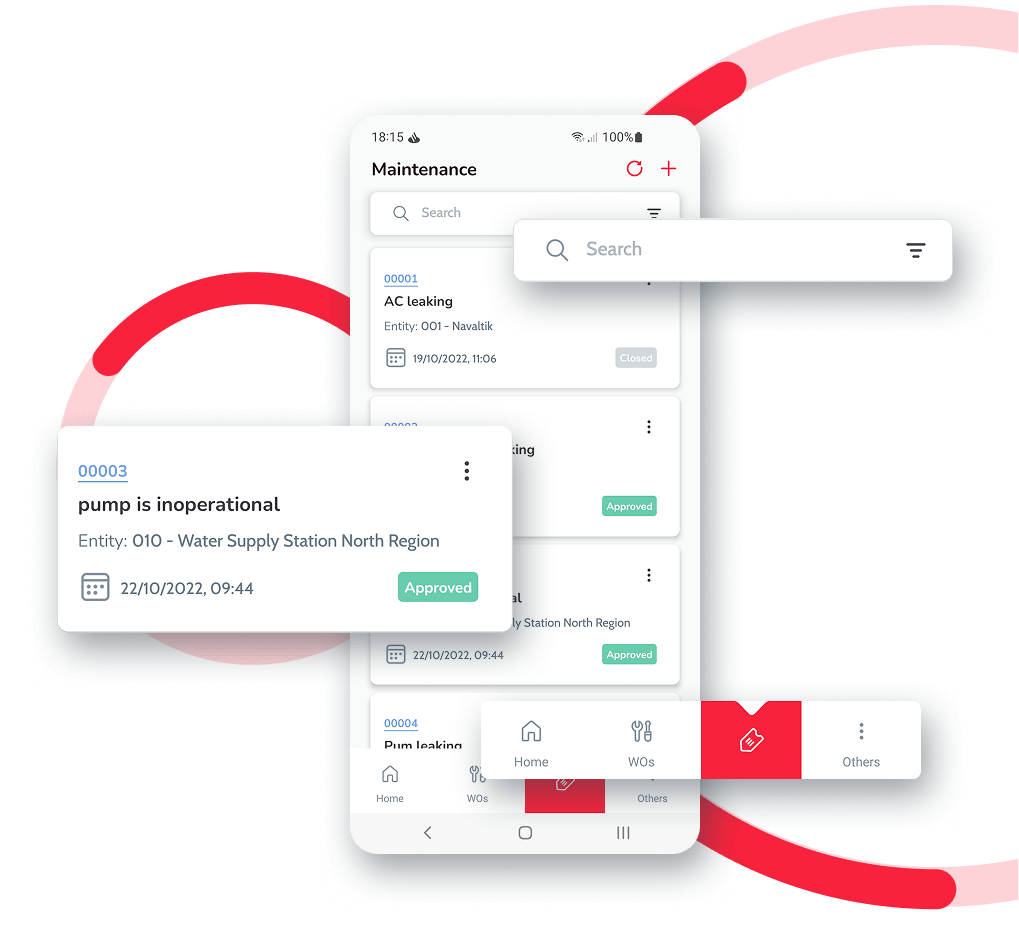
Join ManWinWin Software, the world’s most experienced company in CMMS!
Choose a better way to manage your Maintenance
Watch or book a Demo
Watch a recorded demo or get to know ManWinWin guided by one of our experts.
Use ManWinWin free version
Free forever industrial maintenance management software up to 100 Assets. Start today!
4. Downtime FAQ
Understanding unplanned downtime and its costs
dummy
1. What is the average cost of unplanned downtime per hour?
Costs vary by industry and asset criticality. Manufacturing lines typically lose between five and twenty-two thousand dollars per hour, while utilities and energy production can face losses up to 250 thousand dollars per hour. Hidden costs, such as quality defects, energy waste, and supply chain delays, often exceed direct repair expenses.
2. How much has downtime increased since 2019?
Global downtime costs have risen by 62 percent since 2019. Aging equipment, more complex production systems, and reliance on reactive maintenance have contributed to this increase. This trend highlights the growing need for structured maintenance strategies.
3. Can maintenance management systems reduce downtime costs?
Yes. Centralized systems that track asset condition, maintenance history, and work orders help teams plan interventions before failures occur. Data-driven maintenance reduces the frequency and duration of unplanned stoppages, directly impacting revenue preservation.
4. Which KPIs are essential for benchmarking downtime?
Key indicators include mean time to repair, mean time between failures, downtime frequency, cost per incident, and lost production hours. Tracking these metrics allows organizations to compare performance with industry benchmarks and prioritize improvements.
5. How do I calculate the revenue leak from downtime?
Multiply the number of downtime hours by revenue per operational hour. Include indirect costs such as labor inefficiency, quality losses, and supply chain ripple effects for a more accurate estimate.
6. Are global downtime benchmarks relevant for smaller facilities?
Benchmarks provide a useful reference but should be adapted to local conditions. Asset value, production volume, and industry-specific processes influence downtime impact, so metrics should be scaled accordingly.
Discover ManWinWin services in maintenance management consulting

Implementation
The implementation consultancy is the component that turns a good software into a good solution.
Training
Training is the component that consolidates and sustains the solution on the client.
Conclusion: Controlling downtime and protecting revenue
Unplanned downtime is a measurable threat to operational efficiency and profitability. In 2026, global losses reach 1.4 trillion dollars, around 11 percent of potential revenue. Benchmarking performance, analyzing failure history, and implementing predictive maintenance strategies are critical for reducing stoppages and controlling revenue leaks.
A structured maintenance management system provides the visibility and data needed to act before failures occur. By centralizing asset information, tracking maintenance activities, and supporting condition-based planning, organizations can reduce unplanned downtime, improve asset reliability, and recover lost revenue.
ManWinWin, a globally proven CMMS platform, delivers exactly this.
It offers scalable, structured tools for industrial and multi-site operations, enabling teams to track maintenance history, monitor asset condition, and schedule interventions based on data-driven priorities.
By converting downtime into a measurable metric, ManWinWin helps organizations protect revenue, extend asset life, and make maintenance decisions that have real financial impact.
Ready to take your maintenance to the next level?
Trusted in over 120 countries – join the global maintenance movement with ManWinWin Software

Join ManWinWin Software, the world’s most experienced company in CMMS!
Choose a better way to manage your Maintenance













About the Author
José Fernandes is the Managing Partner at ManWinWin Software (Navaltik Management), leading company in maintenance management consultancy and CMMS (Computerized Maintenance Management System) solutions.
With a technical background in industrial organization, José Fernandes has been with Navaltik since the 1990s, progressing from consultant to strategic leader and a key figure in the development of the ManWinWin software.
Throughout his career, he has overseen hundreds of maintenance system implementations across more than 30 countries, including regions in Africa, Australia, the Middle East, and East Asia.

